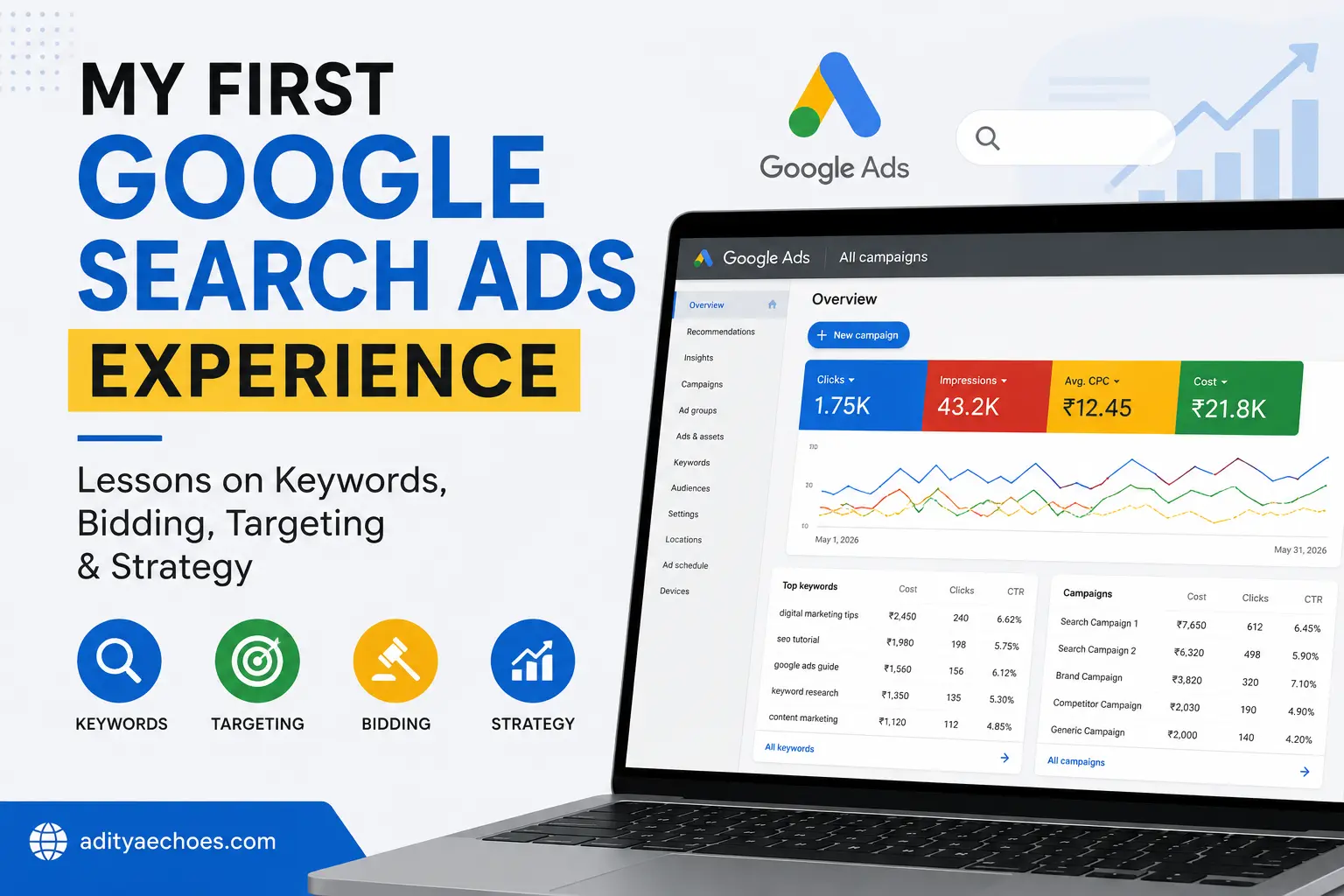
For a long time, I assumed that running ads was simply a matter of selecting keywords, setting a budget, and waiting for traffic. After actually building and launching my first search campaigns, I realized that successful advertising is more about strategy and decision-making than spending money.
The First Question: Why Run Ads When Organic Traffic Already Exists?
Before launching any campaign, I analyzed search performance data and discovered that several non-branded search terms were already generating impressions and clicks organically.
This raised an important question:
“If a website is already receiving impressions and clicks from search engines, why pay for traffic?”
The answer was not as simple as increasing website visits. Paid advertising serves different purposes:
- Occupying additional search result space
- Protecting brand visibility
- Testing new markets and keywords
- Reaching users who may never discover the website organically
- Accelerating growth in competitive search categories
Understanding this difference changed how I approached campaign planning.
Learning the Difference Between Brand and Non-Brand Campaigns
One of the biggest lessons was understanding the difference between:
Brand Campaigns
These target users who already know the business, brand, organization, or associated personalities.
Advantages:
- Lower cost per click
- Higher click-through rates
- Better conversion potential
- Easier to manage
Non-Brand Campaigns
These target users searching for generic product or category terms.
Advantages:
- Reach new customers
- Expand market visibility
- Grow customer acquisition
Challenges:
- Higher competition
- More expensive clicks
- Greater optimization requirements
This distinction became the foundation for campaign planning.
Understanding Google’s Recommendations
During campaign creation, Google frequently suggested higher daily budgets.Initially, I assumed these recommendations were requirements. After deeper analysis, I learned they are simply estimates based on:
- Keyword volume
- Competition levels
- Expected click opportunities
- Advertiser behavior
A recommendation is not an instruction.
Starting with a smaller budget allows advertisers to validate assumptions before scaling.
Learning About Bidding
Another misconception was assuming that lower bids automatically lead to cheaper traffic. In reality, advertising platforms operate through auctions.
The challenge is balancing:
- Visibility
- Click volume
- Cost efficiency
- Conversion potential
The objective is not to get the cheapest click.
The objective is to get the most valuable click.
Why Location Settings Matter
One of the most important settings involved audience location. A small change in location targeting can dramatically affect:
- Reach
- Click quality
- Budget consumption
Targeting users physically present in selected regions often produces more relevant traffic than targeting users who merely show interest in those locations.
Assets Are More Important Than Expected
I initially focused only on keywords. However, search ads also rely heavily on:
- Headlines
- Descriptions
- Sitelinks
- Callouts
- Structured snippets
Here is an example on how these elements improve ad visibility and increase the amount of screen space occupied in search results. A well-structured ad can appear significantly larger and more trustworthy than a basic text ad.

Learning to Ignore the Optimization Score
Advertising platforms often display optimization scores. While useful, these scores should not dictate every decision. A campaign can perform effectively without achieving a perfect score. Many recommendations are designed to increase spend rather than improve business outcomes. The focus should remain on:
- Click quality
- Relevance
- Conversions
- Return on investment
The Most Valuable Lesson
The most important realization was that advertising is not about spending money. It is about making informed decisions. Every campaign forces you to answer questions such as:
- Who am I targeting?
- Why would they click?
- What problem am I solving?
- Is this traffic worth paying for?
- How will I measure success?
The real skill is not launching campaigns.
The real skill is understanding why each setting exists and how it affects business results.
Final Thoughts
Running real campaigns transformed advertising from a theoretical topic into a practical learning experience. The process highlighted the importance of strategy, data analysis, keyword intent, bidding logic, audience targeting, and conversion measurement. The biggest takeaway was simple:
Advertising should not start with budget.
Advertising should start with understanding the customer and the search intent behind every click.