The Role of Data Management in E-commerce
Running a successful e-commerce business means juggling multiple responsibilities, but one area that needs to be well-structured right from day one is data management — especially customer and product data.
Customer data includes crucial information such as names, contact details, addresses, emails, and phone numbers. On the other hand, product data plays an equally vital role — particularly in product mapping, where each purchase is linked to the right customer. This also involves connecting cart data with customer profiles to track buying behavior accurately.
Using External Tools and Their Limitations
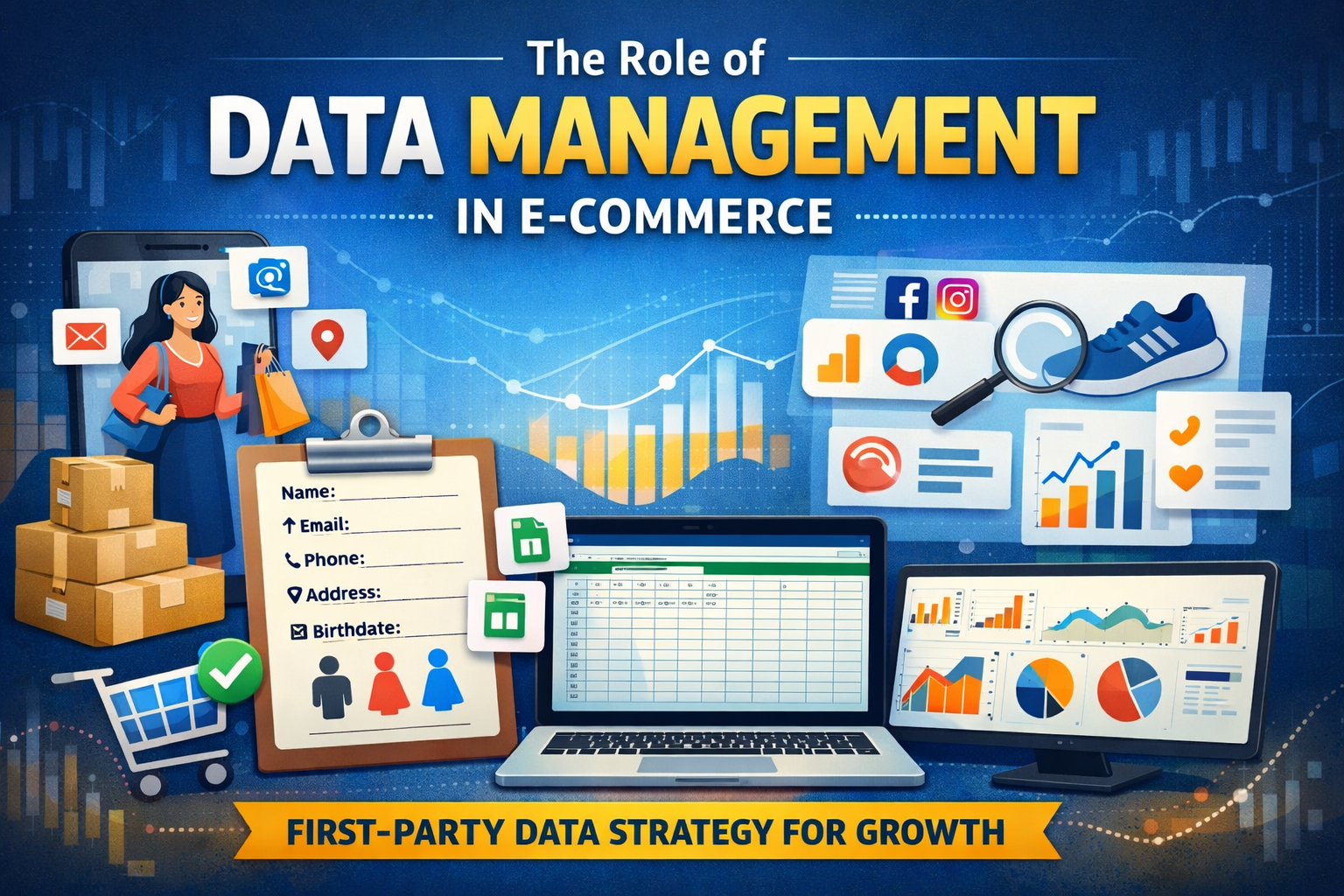
Beyond this core data, we often gather insights from external tools like Meta pixels (Facebook and Instagram), Google Forms, Google Analytics, and other tracking systems. These tools are powerful for understanding customer behavior and campaign performance, but they come with certain limitations. Security compliance settings and user privacy controls can restrict the depth and accuracy of the data we receive.
Why First-Party Data Is More Reliable
That’s why the most reliable and 100% accurate data is the one customers share directly with us during their purchase journey. This is first-party data — and it’s the foundation for precise retargeting, personalized promotions, offering freebies, and overall better marketing decisions. To make the most of it, we must capture every critical data field and organize it efficiently.
Mandatory Customer Data Fields to Capture
The mandatory data fields that should be collected include:
-
First Name and Last Name – for easy identification and personal communication.
-
Email Address – essential for order updates, marketing communication, and follow-ups.
-
Phone Number – for delivery confirmation and quick coordination when required.
-
Full Address (including City, State, and Pincode) – critical for accurate and successful parcel delivery through the website or app.
-
Birthdate – allows us to send special birthday-month offers or exclusive discounts, adding a personal touch.
-
Gender – with options for Male, Female, or Rather Not Say, helping us understand customer segments and personalize recommendations.
Having these fundamental customer details makes it easier to identify from where customers are coming, their age range, how often they purchase, and what products interest them most. In other words, this data is more than enough to analyze buying patterns, customer demographics, and preferences — ultimately helping us build a smarter, data-driven strategy for growth.
How to Structure Your Customer and Product Data
Now comes the next important step — structuring the data we collect. The data from the website or app backend usually comes in a raw format. To make it usable, we need a proper structure and basic tools to work with. From my experience of working with data for over 7 years, I’d suggest not rushing into fancy tools or complex CRMs in the early stages — even if you have around one lakh orders.
Start simple. Work with Excel or Google Sheets to organize your customer and product data. These tools are easy to use, flexible, and completely sufficient for small to medium-scale operations. If you want to visualize insights better and make the data more interactive, Microsoft Power BI is a great addition. It helps you create clean dashboards, identify your pros and cons, and get a clear picture of your business performance without unnecessary complexity.
Building a Scalable Data Foundation
The key idea is to first build a clear, well-organized dataset that you understand before investing in bigger systems. Once your structure and process are stable, you can move to advanced CRMs or automation tools for scalability.